

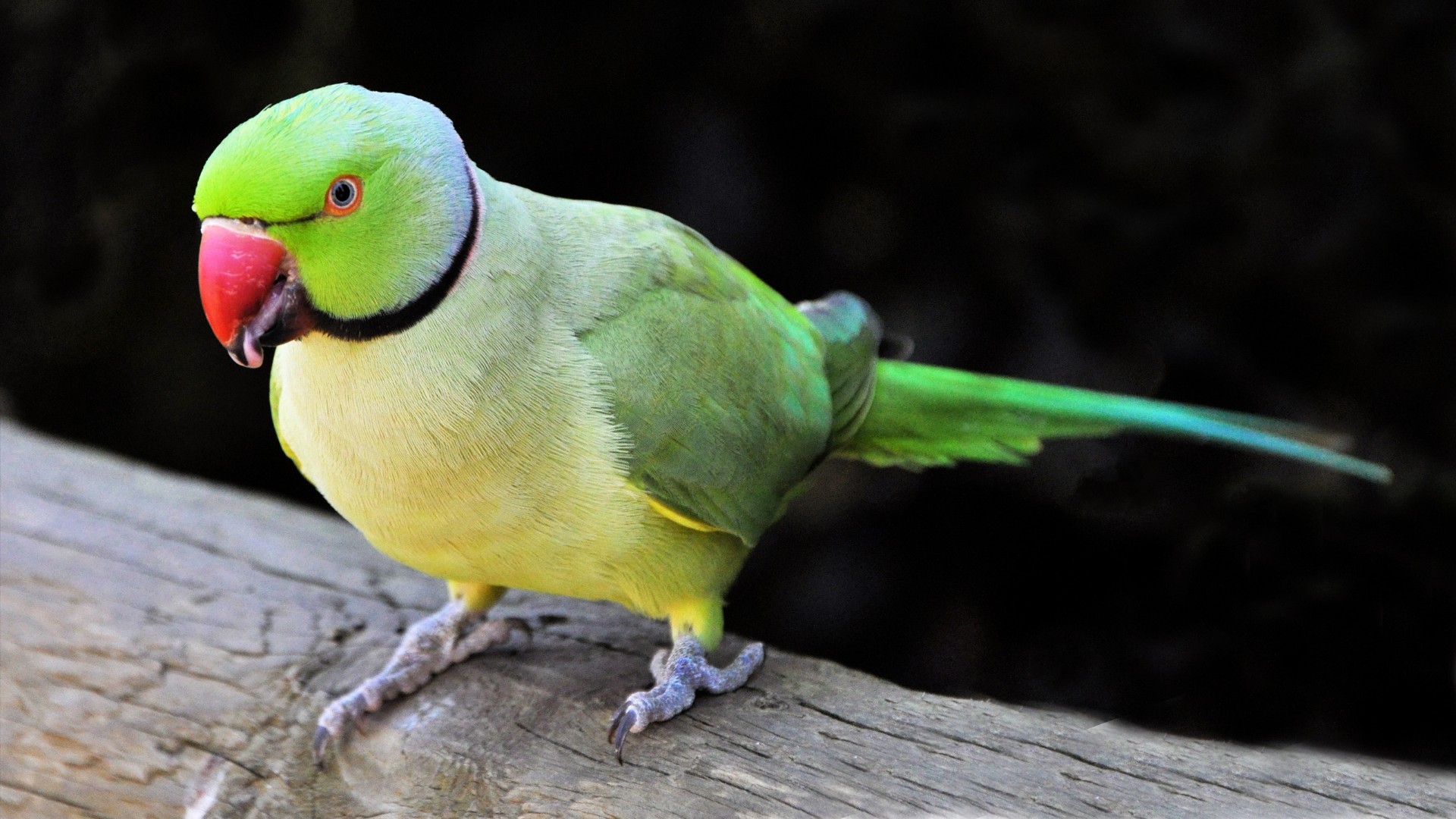
The rose-ringed parakeet, Psittacula krameri, is also called the ring-necked parakeet. It is native to parts of tropical northern Africa and the Indian subcontinent, and it has also established wild populations in many cities around the world after escaped or released pet birds began breeding.
In the wild, rose-ringed parakeets are usually bright green with long tails, red bills, and loud calls. Adult males have the famous neck ring, a dark line edged with pink or rose, while females and young birds usually lack the full ring.
These parakeets are adaptable birds. They live in lightly wooded areas, farms, gardens, parks, orchards, and urban neighborhoods, especially where there are tree cavities or building spaces for nesting.
Their diet includes seeds, grains, buds, fruit, nuts, berries, flowers, nectar, and some insects. Flocks can travel to feeding areas together, and in agricultural regions they may be considered crop raiders.
Rose-ringed parakeets nest in cavities, often in trees but sometimes in buildings. They are intelligent, social, and noisy birds, which helps explain both their popularity as pets and their success when they establish feral city populations.